
 EN
EN
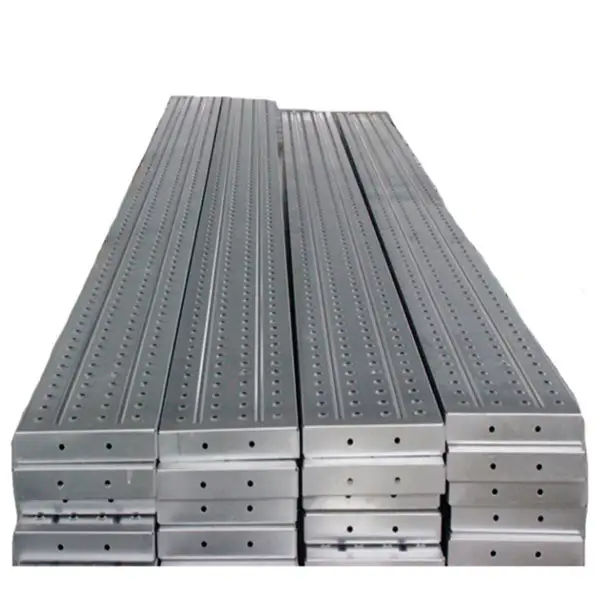
Why Lightweight Scaffolding Steel Plank Enhances On-Site Safety and Productivity
Reducing Manual Handling Risk and Labor Fatigue
The old school scaffolding planks really take a toll on workers when moving them around and setting them up. According to data from the UK Health and Safety Executive released last year, those dealing with regular steel planks face about 25% more musculoskeletal injuries compared to others. The newer lightweight options cut down on weight by roughly 30 to 40 percent, which means one person can handle what used to need two people working together. What this actually does is reduce the risk of back problems, those nagging repetitive stress issues from constantly adjusting positions, and accidents caused by tired workers making mistakes while laying out the deck.
A leading UK contractor documented an 18% reduction in handling incidents after switching to lightweight systems, with project managers noting sustained crew energy levels throughout shifts.
Meeting EN 12811-1 and OSHA Ergonomic Guidelines
Lightweight steel planks today are built to handle more than just the basic requirements set out in EN 12811-1 for distributed loads, which sits at around 2.5 kN per square meter. They also take into account what OSHA considers safe when it comes to lifting things manually, sticking close to their suggestion that workers shouldn't lift anything heavier than about 50 pounds or roughly 22 kilograms. The planks themselves meet all the necessary standards for how much they can bend before breaking down, keeping surfaces from getting too slippery thanks to friction levels above 0.5, and resisting rust and other forms of degradation as specified by ISO 12944 guidelines. When companies follow both European and American safety rules like this, it becomes much easier to use the same equipment across different countries on big international projects. Recent reviews of actual construction sites show this standardization cuts down on paperwork and management tasks by almost a third compared to older methods.
Engineering the Lightweight Scaffolding Steel Plank: Materials, Geometry, and Load Integrity
High-Strength Low-Alloy (HSLA) Steel and Zinc-Aluminum Coating for Durability
Today's scaffolding steel planks are made from High Strength Low Alloy (HSLA) steel which gives them tensile strength over 350 MPa but weighs about 15 to 30 percent less than regular carbon steel. This means we can build planks that are thinner and lighter yet still hold up when workers walk across them or equipment gets placed on top. The planks get coated with a special mix of zinc and aluminum (about 55% aluminum, 43.4% zinc and just 1.6% silicon) that creates three layers of protection against rust. Testing shows these coatings last 2 to 4 times longer than normal galvanized steel according to ASTM B117 standards. In real world conditions along coastlines where salt air eats away at metal, these planks should last well past 20 years before needing replacement, cutting down on maintenance expenses by roughly 40%. Plus their smooth surface doesn't let bacteria stick around, keeping construction sites cleaner overall.
Perforated, Ribbed, and Hollow-Core Profiles: Weight Savings Without Sacrificing 2.5 kN/m² Load Capacity
Engineered geometries achieve 25–40% weight reduction while fully maintaining EN 12811-1:2020's critical 2.5 kN/m² distributed load capacity. Three key innovations drive this efficiency:
- Perforated patterns (8–12 mm holes) cut 8–12% mass while improving drainage and slip resistance
- Longitudinal ribs increase section modulus by 22%, enhancing rigidity against point loads
- Hollow-core designs reduce weight by 30% through strategic void placement in low-stress zones
Finite element analysis confirms uniform load distribution and deflection below L/250 at maximum capacity. Wind tunnel testing shows 50% lower wind drag than solid decks, improving stability at height. Third-party ISO 17025–accredited labs validated zero permanent deformation after 10,000+ load cycles.
Installation Efficiency Gains with Lightweight Scaffolding Steel Plank
Faster Decking Cycles and Reduced Crane/Lift Dependency
The lighter weight of these steel planks makes them much easier to handle during installation. Workers can get the planks into place about 30 to maybe even 50 percent faster compared to those old heavy options out there. That means less need for big machinery like cranes or lifts which saves time and money. The reason? Better design choices combined with smarter material picks let crews carry and fix the decking in place without breaking a sweat. For construction projects, this translates to quicker setups overall, reduced expenses on renting equipment, and faster completion times while still meeting all safety standards and building codes.
Real-World Impact: 42% Faster Handling in UK High-Rise Projects (BS EN 12811-1 Verified)
Studies looking at various high rise building projects throughout the UK found that workers could handle materials 42 percent faster when using these lighter steel scaffolding planks. These findings were checked against the BS EN 12811-1 safety standards as well. The faster handling times mean workers spend fewer hours on site and finish jobs quicker than before. Lightweight options typically weigh between 15 to 25 percent less than regular steel planks. Because they're easier to move around, construction teams can put down more decking during each work shift. Best part? They still meet all the necessary requirements for load capacity at 2.5 kN per square meter, so there's no compromise on safety despite the weight savings.
Addressing Performance Concerns: Wind Stability, Rigidity, and Long-Term Reliability
The new lightweight steel planks for scaffolding tackle three main issues at once wind movement problems, how well they hold up when loaded, and staying resistant to rust over time all thanks to clever engineering design. The smart holes in these planks cut down wind pressure by around 30 to 40 percent compared with solid ones, so there's less risk of them lifting off during strong winds. They still meet the EN 12811-1 standards though. With their ribbed shape along the length and just the right amount of steel thickness, these planks stay rigid even when carrying loads up to 2.5 kN per square meter. This means bending stays below 1/250th of the total span length, which passes OSHA's safety requirements for structures. When it comes to lasting power, the special zinc aluminum coating on these planks fights corrosion about five times better than regular galvanized steel would. That makes them ideal for places near saltwater or where chemicals are present. Independent tests have shown these planks show zero signs of wear after going through over 10,000 loading cycles in real world conditions.
FAQ
What are the advantages of using lightweight scaffolding steel planks?
Lightweight scaffolding steel planks reduce manual handling risk and labor fatigue, meet international safety standards, and enhance installation efficiency, all while maintaining load capacity and durability.
How do lightweight scaffolding steel planks enhance on-site safety?
They reduce musculoskeletal injuries by being easier to handle, have coatings that prevent slipping and rust, and maintain stability against wind and point loads.
Are these planks environmentally friendly?
Yes, the long-lasting durability and reduced maintenance needs contribute to a lower environmental impact compared to traditional planks.
Table of Contents
- Why Lightweight Scaffolding Steel Plank Enhances On-Site Safety and Productivity
- Engineering the Lightweight Scaffolding Steel Plank: Materials, Geometry, and Load Integrity
- Installation Efficiency Gains with Lightweight Scaffolding Steel Plank
- Addressing Performance Concerns: Wind Stability, Rigidity, and Long-Term Reliability
- FAQ