
 EN
EN
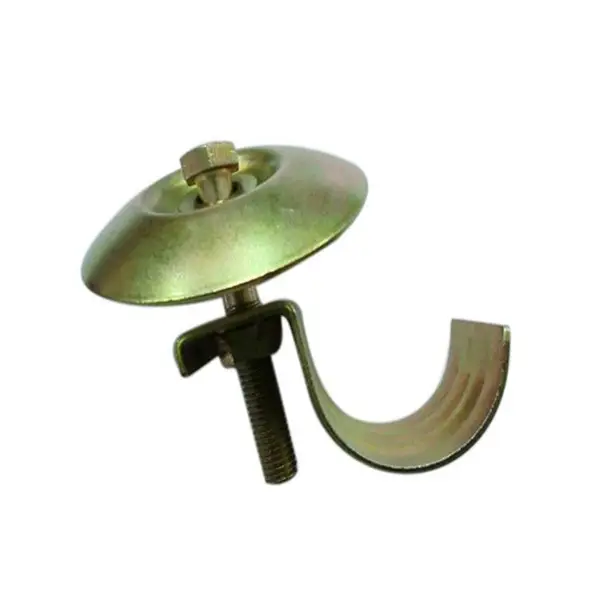
Why Diagonal Scaffolding Clamps Are Critical for Lateral Stability
The Physics of Instability: How Unbraced Frames Fail Under Wind and Dynamic Loads
When scaffolding frames aren't properly braced, they tend to collapse when subjected to sideways forces. This happens because of something called racking deformation. Basically, the vertical posts act more like hinges than stable supports, which lets the whole structure twist into a parallelogram shape. According to recent OSHA data from 2023, just one section without bracing can shift sideways by as much as 20% when exposed to winds around 30 mph. Things get even worse when workers move around on the scaffold since their movements create vibrations that actually make the structure sway more. What follows is what engineers call progressive torsional failure. Once a section starts to buckle, the stress spreads quickly to neighboring parts, kind of like how dominos fall one after another when the first one tips over.
Triangulation in Practice: How Diagonal Scaffolding Clamps Enforce Rigid Load Paths
Diagonal scaffolding clamps convert unstable rectangles into geometrically invariant triangles—enabling true load-bearing rigidity. By connecting standards at opposing angles (typically 45°), they establish continuous tension-compression paths that resist deformation. When lateral force is applied:
- Diagonal members carry load axially—either in pure tension or compression—minimizing bending stress at joints
- Load transfer becomes efficient and predictable, reducing deflection by 78% compared to unbraced frames (NIST Structural Study)
This triangulation allows properly installed clamps to withstand up to three times the design wind load—not by brute strength alone, but by leveraging geometry to transform destabilizing energy into structural stability.
Key Design Features of High-Performance Scaffolding Clamps
Selecting the right scaffolding clamp directly impacts structural integrity, load distribution, and on-site safety. Performance hinges on two interrelated design priorities: mechanical adaptability and verifiable compliance.
Adjustable-Angle vs. Fixed-Head Clamps: Matching Clamp Geometry to Scaffold Configuration
Angle adjustable clamps give real flexibility when dealing with those tricky situations that don't fit standard setups. Think curved building fronts, angled ground surfaces, or old buildings needing new fittings. These clamps can be adjusted anywhere between completely flat at 0 degrees all the way up to right angles at 90 degrees. On the flip side, fixed head clamps are built for strength and quick installation on regular patterns like straight lines or common corner joints at 45 or 90 degree angles. The solid build of these models usually handles much greater force loads, sometimes reaching around 25 kilonewtons of resistance. That makes them particularly good choices for areas where strong winds are common or for taller scaffolding structures that need extra stability.
Strategic selection balances trade-offs:
- Flexibility vs. Strength: Adjustable clamps prioritize adaptability but require precise setup; fixed clamps eliminate variability and reduce installation time by 30% in standardized builds
- Use Context Matters: Choose adjustable units where geometry varies unpredictably; specify fixed-head clamps where consistency, speed, and peak load resistance are paramount
Mismatched clamp types are a leading cause of localized instability—and ultimately, systemic collapse.
Compliance & Confidence: ISO 16529 Load Ratings and Integrated Torque Verification
Real performance starts with something that can actually be traced back: compliance. The ISO 16529 standard has become the go-to reference point worldwide when it comes to testing scaffold clamps. This standard requires independent checks on how well clamps handle tension forces, compression stresses, and shear loads in actual working environments, with official ratings going up to 20 kN. Torque verification matters just as much though. Products with built-in alignment guides or those click sensations when tightened properly help workers know they've done their job right. These simple but effective features stop clamps from coming loose due to constant vibrations or temperature changes over time. According to recent field reports published last year in Safety Standards Review, combining these two approaches cuts down on clamp failures by around 40 percent. Before putting any clamps into service, make sure there are legitimate third party certifications somewhere visible. Clamps that don't meet these requirements simply won't stand up to what's needed for jobs where people's lives depend on them staying secure.
Engineering Effective Diagonal Bracing Layouts Using Scaffolding Clamps
Bracing Density Guidelines: Applying EN 12811-1 Annex C per Bay and Elevation
Good bracing has nothing to do with randomly throwing in diagonal supports. It all comes down to positioning those braces exactly where the math and physics say they need to be. The EN 12811-1 standard actually has some pretty solid guidelines for this stuff in its Annex C section. When working with scaffolds below 20 meters tall, safety regulations require putting braces in every fourth horizontal bay and every third vertical lift. Things get stricter when scaffolds reach over 20 meters though. At that point, the rules call for braces in every second bay horizontally and every second lift vertically. Why such strict requirements? Because as structures get taller, even small alignment issues can create massive problems due to increased forces acting against stability.
Swivel type clamps play a key role in following industry standards, allowing adjustments between roughly 15 degrees to 60 degrees which helps get the best possible load transfer along the axis while preventing those annoying bending issues. When it comes time to check everything works properly, we need to verify that the torque is at least 50 Newton meters according to ISO 16529 standards. Also important is making sure none of the bays go beyond that 4 to 1 ratio when looking at unbraced lengths compared to widths. The whole point of sticking to these established methods instead of going off the cuff is pretty clear actually. Structures built this way experience over 70 percent less sideways movement during strong winds, something that has been proven through actual wind simulation tests specified in EN 12811-3.
Field-Validated Best Practices for Installing and Inspecting Scaffolding Clamps
Rigorous installation and inspection protocols are non-negotiable: industry data shows adherence to validated clamp procedures reduces fall-related incidents by 68%. Three principles form the foundation of field-proven reliability:
- Pre-Installation Verification: Examine each clamp for hairline fractures, thread damage, or corrosion using magnetic particle testing where appropriate. Discard any component showing >10% material loss—micro-defects propagate rapidly under cyclic loading.
- Torque-Controlled Installation: Tighten all connections to manufacturer-specified values (typically 50–70 Nm) using calibrated, traceable torque tools. Under-torquing invites slippage; over-torquing induces brittle fracture—both violate the load-path integrity established by triangulation.
-
Hierarchical Inspection Regimes:
Frequency Checkpoints Documentation Requirement Pre-shift Visual integrity, clamp alignment Digital checklist Weekly Load distribution, corrosion depth Annotated photos Post-event Structural deformation, impact damage Engineering report
Cross-train crews in EN 12811-1 compliance checks—with special attention to diagonal bracing junctions, where fatigue and micro-movement first manifest. Never alter clamps via welding, grinding, or pinching: ISO 16529 test data confirms such modifications degrade load capacity by up to 40% through uncontrolled metallurgical change.
FAQ
How do diagonal scaffolding clamps improve lateral stability?
Diagonal scaffolding clamps enforce geometric rigidity by converting unstable shapes into triangles, allowing for a more robust load-bearing structure and resisting deformation.
What are the differences between adjustable-angle and fixed-head clamps?
Adjustable-angle clamps offer flexibility and adaptability for irregular configurations, while fixed-head clamps provide strength and quick installation for standard scaffold setups.
Are there specific standards scaffolding clamps need to meet?
Yes, scaffolding clamps should meet the ISO 16529 standard for tension, compression, and shear load assurance, and they should undergo independent verification.
Why is torque verification important for clamps?
Torque verification ensures proper tightening, which prevents clamps from loosening due to environmental changes or vibrations, maintaining load-path integrity.